
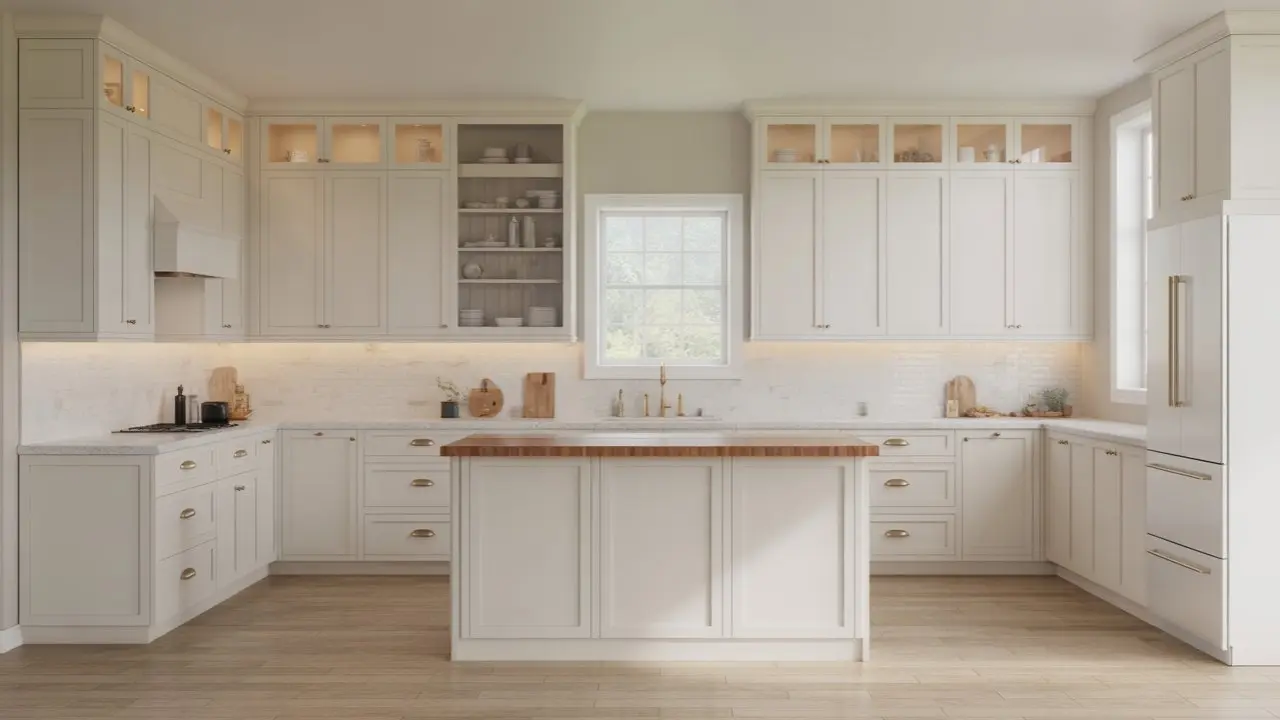
Walk into a well-designed kitchen and you feel it instantly. Everything just fits. The colors, the textures, the layout, even the smallest details seem to belong together. Now imagine the opposite. A cabinet that looks out of place, mismatched finishes, uneven spacing. It feels off, right?
That feeling comes down to design consistency. It is the invisible thread that ties every element of a kitchen together. Without it, even high-quality materials can look disjointed.
Consistency is not accidental. It is carefully planned, monitored, and maintained from the first sketch to the final installation.
Why Consistency Matters in Kitchen Design
Consistency creates visual harmony. It makes a space feel intentional rather than random. But it is not just about looks.
It also affects functionality. When design elements align, movement becomes smoother, storage becomes intuitive, and the kitchen works as a cohesive system. This alignment reduces friction in everyday tasks and enhances usability over time.
Think of it like a well-rehearsed orchestra. Every instrument plays its part, but they all follow the same rhythm.
Understanding the Role of a Kitchen Renovation Company
A kitchen renovation project involves many moving parts. Designers, contractors, suppliers, and installers all contribute to the final outcome.
A professional kitchen renovation company acts as the central coordinator, ensuring that every contributor works toward the same design goal without deviation.
Coordinating Design and Execution
The challenge lies in keeping everyone aligned. A design idea on paper must translate accurately into physical form.
This requires clear communication and structured processes. Every decision must support the original design vision. Even small adjustments are evaluated to ensure they do not disrupt the overall cohesion.
Managing Multiple Elements Simultaneously
Cabinetry, countertops, flooring, lighting, and appliances all interact with each other. Changing one element can affect the entire design.
A kitchen renovation company ensures that these elements evolve together rather than independently. This synchronized approach prevents mismatches and maintains balance throughout the project.
Initial Planning and Concept Development
Creating a Unified Vision
Every consistent design starts with a clear vision. This vision defines the style, mood, and functionality of the kitchen.
Without it, decisions become reactive rather than strategic. A strong initial concept serves as a guiding reference for every choice made later in the project.
Importance of Mood Boards and Design Briefs
Mood boards act as visual guides. They combine colors, textures, and materials into a single reference point.
Design briefs outline the goals and constraints of the project. Together, they provide a roadmap that keeps the project on track and ensures that all stakeholders share the same expectations.
Material Selection and Standardization
Choosing Complementary Materials
Materials must work together both visually and functionally. A glossy countertop paired with matte cabinets can either create contrast or clash depending on execution.
Consistency comes from thoughtful pairing rather than random selection. Each material is evaluated in context with others to ensure harmony.
Maintaining Uniform Quality
Using materials of similar quality ensures that no single element stands out negatively. It also supports durability and long-term performance.
Consistent quality levels help maintain the overall integrity of the kitchen and prevent premature wear in specific areas.
Color Palette Coordination
Establishing a Core Color Scheme
A consistent kitchen design relies on a well-defined color palette. This includes primary colors, secondary tones, and accent shades.
Limiting the palette helps maintain focus and prevents visual clutter. It also makes it easier to introduce subtle variations without disrupting the overall theme.
Balancing Contrast and Harmony
Contrast adds interest, but too much can disrupt harmony. The key is balance.
For example, darker cabinets can be paired with lighter countertops to create depth without overwhelming the space. Strategic contrast enhances visual appeal while maintaining cohesion.
Cabinetry and Storage Design Alignment
Consistent Cabinet Styles
Cabinets often dominate the visual space in a kitchen. Their style sets the tone for the entire design.
Using consistent cabinet profiles, finishes, and proportions ensures a unified look. Even minor inconsistencies in style can become highly noticeable due to the prominence of cabinetry.
Hardware Matching
Handles, knobs, and hinges may seem like small details, but they have a big impact. Matching hardware across all cabinets reinforces consistency.
Coordinated hardware also contributes to a polished and intentional finish, tying together different sections of the kitchen seamlessly.
Layout Planning for Functional Consistency
Workflow Optimization
A consistent design is also about how the kitchen works. The layout should support natural movement between cooking, cleaning, and storage areas.
This concept is often referred to as workflow efficiency. A well-planned layout reduces unnecessary steps and improves daily usability.
Spatial Balance
Balance involves distributing elements evenly across the space. Overloading one area while leaving another empty can disrupt both function and aesthetics.
Proper spatial planning ensures that the kitchen feels comfortable and visually stable from every angle.
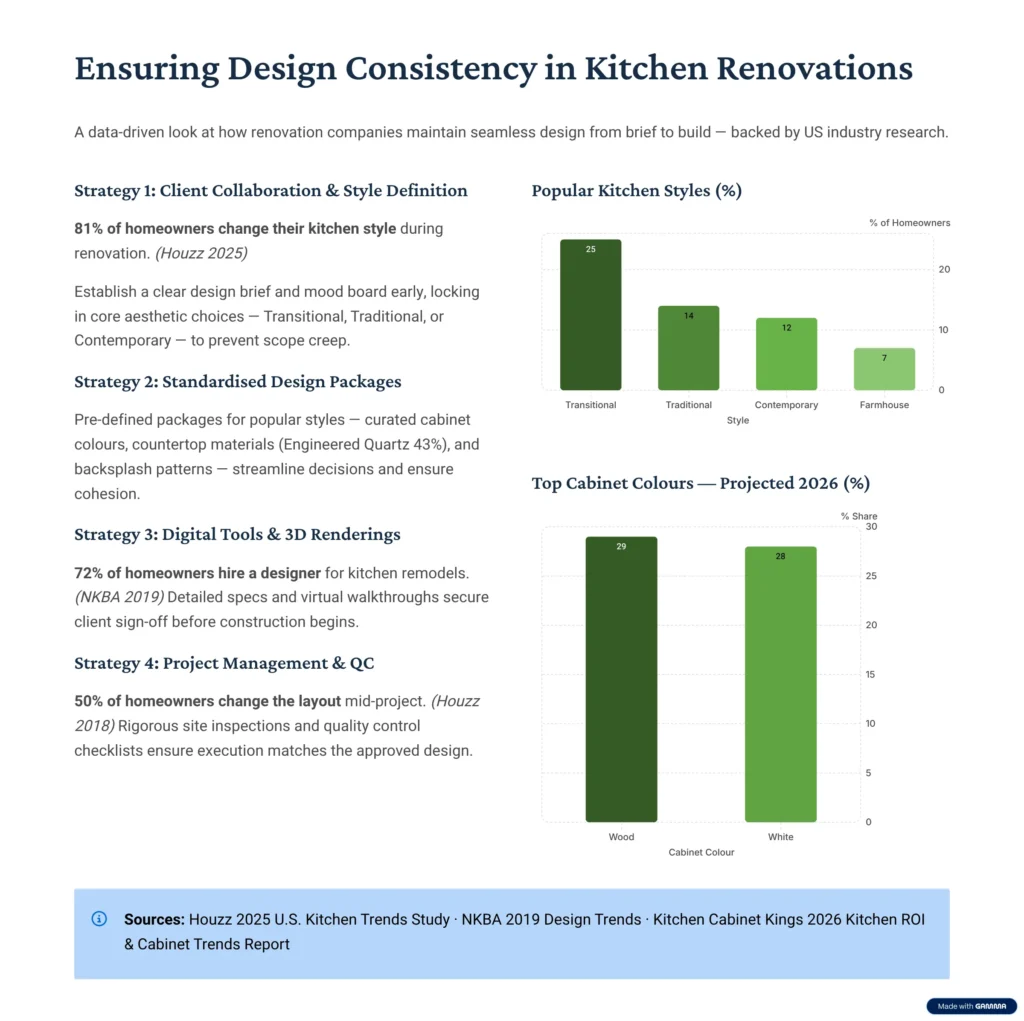
Communication Across Teams
Designers and Contractors Collaboration
Clear communication is essential for maintaining consistency. Designers must convey their vision accurately, and contractors must interpret it correctly.
Regular discussions and updates help ensure that everyone remains aligned throughout the project lifecycle.
Documentation and Guidelines
Detailed drawings, specifications, and guidelines act as references throughout the project.
They ensure that everyone involved follows the same plan. These documents also reduce the risk of misinterpretation and provide clarity during execution.
Quality Control and Inspection Processes
Regular Site Checks
Frequent inspections help identify deviations early. This allows for corrections before issues become more complex.
Regular site visits also ensure that work progresses according to the approved design and specifications.
Addressing Deviations Early
Small inconsistencies can grow into major problems if left unaddressed. Early intervention keeps the project aligned with the original design.
Timely corrections help maintain both visual and functional consistency without causing delays.
Maintaining design consistency during a renovation is not only about planning and material selection, but also about how accurately those decisions are executed on-site. This is why regular inspections, structured site checks, and early identification of deviations play such an important role in preserving the original vision. A strong system of installation quality checks ensures that every detail is implemented according to specification, helping the finished kitchen reflect the intended design without unexpected inconsistencies.
Role of Technology in Maintaining Consistency
Design Software and 3D Modeling
Modern design tools allow for detailed visualization before construction begins. This reduces uncertainty and improves accuracy.
These tools also help homeowners better understand how different elements will look together in the finished space.
Project Management Tools
Digital tools help track progress, manage tasks, and maintain communication.
They ensure that every stage of the project follows the plan and that updates are shared efficiently among all team members.
Challenges in Maintaining Design Consistency
Material Availability Issues
Sometimes materials become unavailable or delayed. Substituting materials can disrupt consistency if not handled carefully.
A thoughtful selection of alternatives that match the original design intent helps minimize visual and functional differences.
On-Site Adjustments
Unexpected conditions on-site may require changes. These adjustments must align with the overall design to maintain consistency.
Careful evaluation ensures that necessary changes do not compromise the original vision.
Insights from Kitchen Renovation Company Cleveland
When examining approaches associated with Kitchen Renovation Company Cleveland, a structured process becomes evident. Consistency is achieved through detailed planning, standardized practices, and continuous oversight.
The focus remains on aligning every decision with the original design vision, ensuring that no element feels out of place. This disciplined approach helps maintain quality and coherence across all stages of the project.
Influence of Cleveland Cabinets on Design Consistency
Cabinetry as a Central Design Element
Cabinetry often acts as the backbone of kitchen design.
With Cleveland Cabinets, the emphasis is on maintaining uniformity in style, finish, and construction. Since cabinets occupy a significant portion of the kitchen, their consistency sets the foundation for the entire space.
Other elements are then aligned to complement the cabinetry, creating a cohesive design.
Long-Term Maintenance of Design Integrity
Preserving Materials and Finishes
Consistency does not end when the project is completed. Maintaining the appearance and functionality of materials is essential for preserving the design.
Regular cleaning and proper care help retain the original look. Preventative maintenance also ensures that finishes age evenly over time.
Design consistency in kitchen renovation is not a single step. It is a continuous process that spans planning, execution, and maintenance.
From defining a clear vision to selecting materials, coordinating teams, and monitoring progress, every stage contributes to the final outcome.
A consistent design creates a kitchen that feels balanced, functional, and visually appealing. It transforms individual elements into a unified whole, ensuring that the space works seamlessly in everyday life.
FAQs
1. Why is design consistency important in kitchen renovations?
It ensures that all elements work together visually and functionally, creating a cohesive and efficient space. It also improves the overall user experience.
2. How do renovation companies maintain consistency during construction?
They use detailed plans, regular inspections, and clear communication among all team members. This structured approach keeps the project aligned with the original design.
3. What role do cabinets play in design consistency?
Cabinets often define the overall style and influence the selection of other design elements. Their consistency sets the visual foundation of the kitchen.
4. Can changes during the project affect consistency?
Yes, but careful planning and alignment with the original design can minimize disruptions. Adjustments are made with the overall vision in mind.
5. How does technology help in maintaining design consistency?
Design software and project management tools improve accuracy, visualization, and coordination throughout the project, helping maintain consistency from start to finish.