

A bathroom remodel rarely goes wrong because of the contractor. It goes wrong because of decisions made weeks before anyone picks up a hammer. These seven mistakes show up again and again, on almost every first visit to a homeowner’s bathroom. They rarely look like mistakes at the time. A budget feels reasonable. A tile feels like the right pick. A DIY plumbing fix feels manageable for one weekend.
The trouble surfaces later, once demo has already started and the layout is already locked in. By then, fixing the mistake costs far more than avoiding it would have.
Every one of these seven is avoidable with the right planning, and none of them require special expertise to catch early. They just take the right order of decisions, made before the first hammer swings.
Why Bathroom Remodel Mistakes Cost More Than They Should
A bathroom is a small room with a lot going on inside its walls. Plumbing, electrical, ventilation, tile, and cabinetry all have to work together in a few square feet.
That density is exactly why small mistakes turn expensive fast. Move a wall a few inches too late and the plumber has to redo work that was already finished. Pick a floor tile before the shower pan is confirmed and the two might not line up.
Homeowners planning bathroom remodeling in Fairview Park run into the same seven mistakes whether they live in a 1950s ranch near Kamm’s Corners or a newer build closer to Rocky River. None of them are complicated to avoid. They just have to be caught early.
Mistake 1: Setting a Budget Without Room to Breathe
The most common mistake is not underspending or overspending. It is setting a budget with no room for the unexpected.
Older homes in this part of Northeast Ohio often hide surprises behind the walls: outdated plumbing, undersized electrical, or subfloor damage from a slow leak nobody noticed. None of that shows up until demo starts.
A Contingency Fund Even Experienced Remodelers Keep
A realistic bathroom remodel budget sets aside 10 to 20 percent above the expected total for exactly this kind of surprise. Skipping that cushion does not make the surprises less likely. It just means the homeowner is choosing between stopping the project or scrambling for extra funds mid-remodel.
This is one reason a proper bathroom remodeling process starts with a design conversation, not a demo date. A designer who has seen what is behind the walls in older Fairview Park homes can flag likely surprises before they become expensive ones.
Mistake 2: Locking In Finishes Before the Layout Is Final
It is tempting to fall in love with a tile or a vanity before the layout is settled. That is backward, and it is the second most common mistake homeowners make.
Why Layout Changes Ripple Through Every Other Decision
Moving a toilet, widening a shower, or adding a second sink changes plumbing runs, electrical placement, and the exact square footage available for flooring. A tile ordered before the layout is locked can end up short, or wrong for the new dimensions entirely.
The fix is simple: finalize the layout first, even if it takes an extra meeting. Everything else, including custom bathroom design choices like cabinetry and countertops, should follow the layout, not the other way around.
A midrange bathroom remodel typically recoups around 70 percent of its cost at resale, according to national industry data.
Mistake 3: Underestimating How Long Permits and Custom Orders Take
Homeowners planning their own timeline often forget that permits and material lead times run on their own schedule, not the contractor’s.
Moving plumbing or adding an electrical circuit almost always requires a permit, and approval can take longer than the actual construction. Custom vanities, tile, and glass shower enclosures can also carry lead times of several weeks.
Ordering materials and pulling permits before demo day, not after, is what keeps a bathroom remodel from stalling halfway through.
Mistake 4: Skipping the Correct Order of Operations
A bathroom has more trades packed into a small space than almost any other room in the house, and the order those trades work in matters.
Demolition comes first, then plumbing and electrical rough-in, then waterproofing, then tile, then paint, and only then fixtures like the vanity, toilet, and mirror. Installing a vanity before the floor is tiled, or painting before drywall dust has settled, creates rework that costs both time and money.
A remodeler who follows this sequence every time is protecting the homeowner’s investment, not just following habit.
Mistake 5: Choosing Materials That Look Good but Don’t Hold Up
A bathroom is one of the most-used, most-humid rooms in the house. Materials that look stunning in a showroom sample can fail fast under daily steam, splashing, and cleaning.
Polished natural stone can become slippery when wet. Some open shelving collects moisture it was never designed to handle. The right choice balances how a material looks with how it performs every single day for the next fifteen years.
This is where sitting down with a designer pays off. Cleveland Cabinets is locally owned since 2015 and has watched which finishes actually hold up in Northeast Ohio homes, not just which ones photograph well.
Mistake 6: Trying to DIY Work That Needs a Licensed Pro
Painting a wall or swapping a towel bar is a reasonable weekend project. Moving a drain line, adding a circuit, or altering a load-bearing wall is not.
Plumbing and electrical work in a bathroom almost always intersects with code requirements, and getting it wrong can mean redoing finished work, failing an inspection, or creating a safety issue that surfaces months later.
Bathrooms hide their problems well. A drain line that was not sloped correctly, or a splice that was not made to code, can sit behind a wall for a year before a leak or a short finally shows up. By then the damage has usually spread past the original repair, into subfloor, drywall, or cabinetry that now has to be replaced too.
Licensed work also protects the home at resale. An inspector or a buyer’s contractor can spot unpermitted plumbing and electrical changes, and it becomes a negotiating point at exactly the wrong time. Hiring a licensed pro for these tasks from the start means the work is inspected, documented, and backed by a workmanship warranty, so there is nothing to explain away later.
Most full bathroom remodels take three to eight weeks of active construction, according to industry timelines.
Mistake 7: Forgetting to Plan for Life Without the Bathroom
The seventh mistake is not a design mistake at all. It is a planning mistake: not thinking through how the household will function while the only full bathroom is out of commission.
Families with one bathroom often need to schedule around a neighbor, a gym membership, or a second-floor half bath during the heaviest construction days. Sorting this out before demo day starts is far less stressful than figuring it out the morning the water gets shut off.
Cleveland Cabinets has earned 120+ reviews from homeowners across Northeast Ohio.
How a Design-Led Process Helps You Avoid All Seven
Every one of these mistakes traces back to the same root cause: decisions made in the wrong order, or without enough information at the time they were made.
What a Budgetary Estimate Actually Covers
A budgetary estimate is not a final price. It is a preliminary scope that helps a homeowner choose materials and a layout that fit their budget before anything is ordered. That single step, done early, prevents mistakes one, two, three, and five on this list before they ever happen.
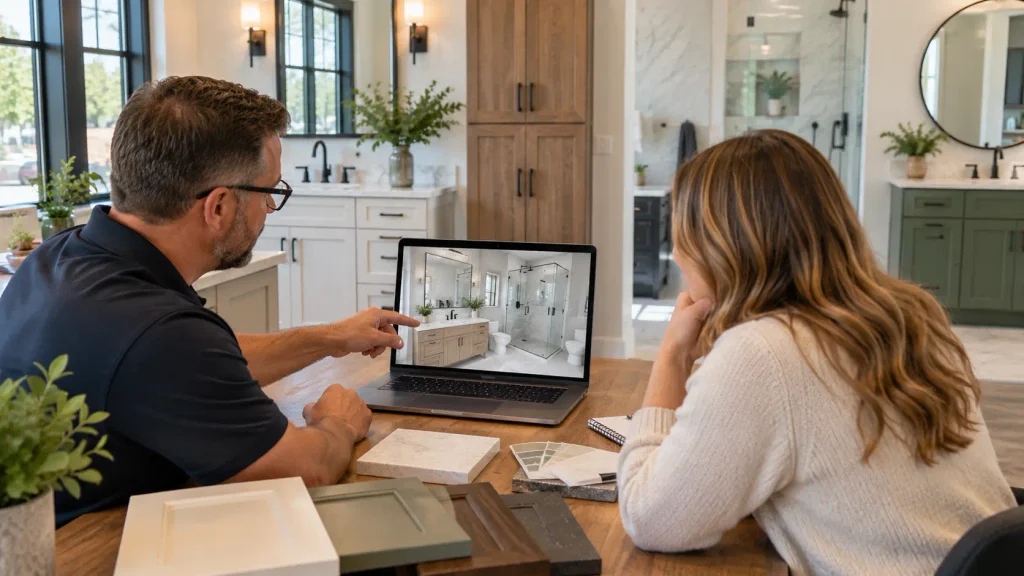
Design is a paid professional service, and it includes 3D renderings so the layout is fully understood before demo day, not guessed at. Homeowners who sit down with a designer before signing anything consistently avoid the most expensive mistakes on this list.
Cleveland Cabinets Serving the Kamm’s Corners Community and Beyond in Fairview Park
Cleveland Cabinets works with homeowners throughout Fairview Park, including the Kamm’s Corners area near Rocky River. Many of the homes near the Lorain Ave and Rocky River Dr crossing were built decades before today’s plumbing and electrical codes, at roughly 41.4515471, -81.8246662, which is exactly why the mistakes above show up so often in this part of town.
Get Bathroom Remodeling Kamm’s Corners Services Now
Navigate from Kamm’s Corners to Cleveland Cabinets Now
Frequently Asked Questions
How long does a bathroom remodel take from start to finish?
Most full bathroom remodels take three to eight weeks of active construction. The full timeline, including design, permits, and material lead times, often runs longer than the construction itself.
Do I need a permit to remodel a bathroom in Fairview Park?
Any project that moves plumbing, adds electrical circuits, or changes structural elements typically requires a permit. A cosmetic update, like new paint or a swapped faucet, usually does not.
Can I stay in my home during a bathroom remodel?
Yes, in most cases. If it is the only full bathroom in the house, plan around the days when water is shut off for plumbing work.
What is the biggest mistake homeowners make during a bathroom remodel?
Setting a budget with no contingency for the unexpected. Older homes almost always have at least one surprise behind the walls.
Should I choose a walk-in shower or keep my bathtub during a remodel?
It depends on the household. Walk-in showers suit smaller spaces and easier upkeep, while a bathtub still matters to families with young children and to some future buyers.