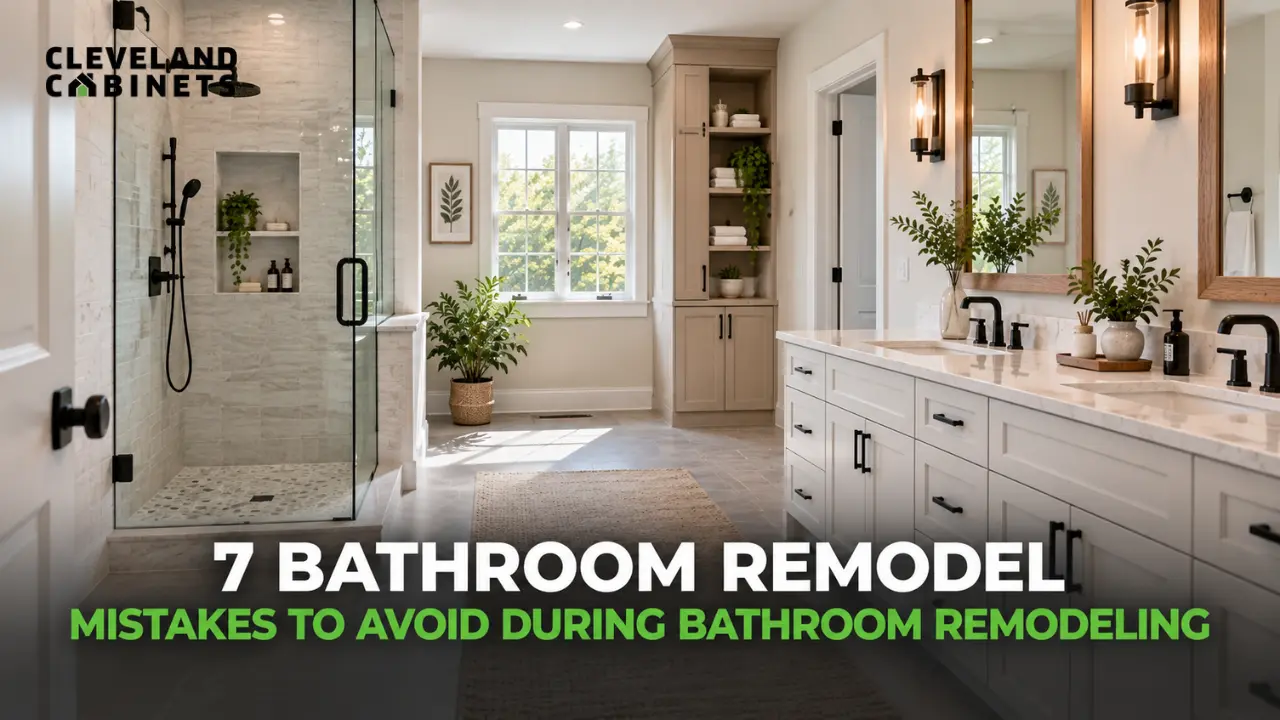
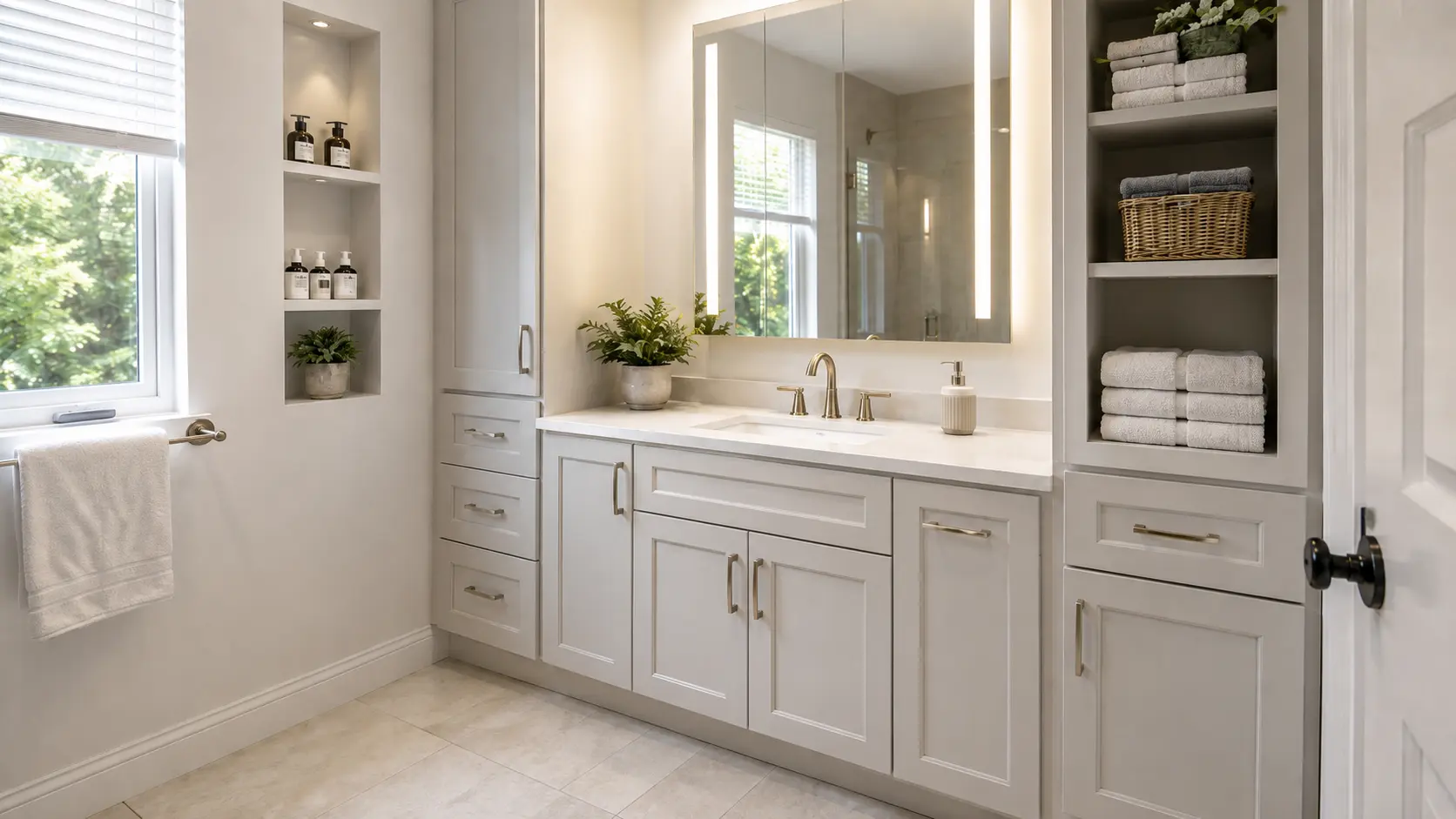
Creating more storage during Bathroom Remodeling in Cleveland is usually accomplished by making better use of the space that already exists rather than increasing the bathroom’s size. Layout improvements, larger or better-designed vanities, vertical storage, recessed wall niches, built in shelving, organized drawers, and carefully planned cabinets all help transform limited square footage into practical storage space. When every area serves a purpose, a small bathroom can feel much more functional without becoming crowded.
Storage is one of the first limitations homeowners notice in smaller bathrooms. Everyday essentials such as towels, toiletries, cleaning supplies, personal care products, and grooming tools quickly fill available cabinets, leaving countertops cluttered and reducing usable space. Thoughtful remodeling addresses these challenges by organizing storage around daily routines instead of relying on decorative features alone.
Professionals at Cleveland Cabinets recognize that successful bathroom layouts depend on balancing storage, accessibility, and comfort. A well-planned design considers how people actually use the room each day so every cabinet, shelf, drawer, and storage compartment contributes to better organization. This educational perspective aligns with the informational writing standards established for Cleveland Cabinets content.
Why Storage Is Often the Biggest Challenge in Small Bathrooms
Bathrooms may be among the smallest rooms in a home, but they often store a surprisingly large number of items. Daily essentials, extra toiletries, bath linens, cosmetics, medications, hair care products, and cleaning supplies all compete for limited cabinet space.
When storage cannot keep pace with everyday needs, countertops become crowded and cabinets become difficult to organize. A remodeling project provides an opportunity to rethink how storage is distributed throughout the room instead of simply replacing existing fixtures.
Good storage planning also improves efficiency. Frequently used items remain easy to reach while less frequently used products stay organized without creating unnecessary clutter.
Understanding the Existing Bathroom Layout
Every successful remodeling project begins with understanding how the current bathroom functions. Before adding cabinets or shelves, it is important to evaluate which areas are being used effectively and which spaces remain underutilized.
The location of the vanity, toilet, shower, doors, and windows influences every storage decision. Even small layout adjustments can create opportunities for additional cabinets or shelving that may not have been possible in the original design.
Identifying Unused Areas
Many small bathrooms contain overlooked spaces that can support additional storage. Empty wall sections, recessed cavities, vertical corners, and areas above existing fixtures often provide practical opportunities for new storage without increasing the room’s footprint.
Looking carefully at these areas helps homeowners maximize every available inch while maintaining comfortable movement throughout the bathroom.
Prioritizing Daily Storage Needs
Not every item requires equal accessibility. Toothbrushes, skincare products, and hand towels may be used several times each day, while extra toiletries and cleaning supplies are accessed less frequently.
Organizing storage according to daily habits creates a more efficient bathroom because frequently used items remain close at hand while long-term storage occupies less accessible spaces.
Why Bathroom Remodeling in Cleveland Starts With Space Planning
One of the most important steps during Bathroom Remodeling is evaluating how available space can support better organization before selecting finishes or decorative elements. Storage solutions are most effective when they are integrated into the layout rather than added afterward.
Careful planning considers cabinet dimensions, walking space, door swings, plumbing locations, and fixture placement together. This approach allows storage to become part of the overall design instead of competing with other bathroom features.
Function Before Fixtures
Beautiful fixtures contribute to appearance, but functionality determines how comfortably the bathroom works every day. Prioritizing storage early in the planning process allows cabinets and organizational features to support everyday routines naturally.
A bathroom designed around function often feels larger because every feature has a practical purpose.
Creating a Storage Strategy
Rather than adding storage wherever empty space exists, successful remodeling follows a clear organizational strategy. Daily items, backup supplies, linens, and cleaning products each receive dedicated storage areas based on how frequently they are used.
This structured approach reduces clutter while making the bathroom easier to maintain over time.
Choosing a Vanity That Maximizes Storage
The vanity is typically the largest storage component in a bathroom. Selecting the right configuration significantly affects how efficiently the room functions.
Modern vanity designs often provide better organization than older cabinet layouts because they divide storage into practical compartments instead of one large open space. Drawers, adjustable shelving, and dedicated organizers help maximize every section of the cabinet.
Drawer Based Vanities
Deep drawers allow homeowners to organize toiletries, cosmetics, hair tools, and personal care products more efficiently than traditional cabinets with large open interiors.
Dividers inside drawers further improve organization by separating similar items into dedicated compartments. This arrangement makes everyday essentials easier to locate while reducing unnecessary clutter.
Full Height Cabinet Designs
Some vanities extend closer to the floor, increasing available storage volume inside the cabinet. This additional space can accommodate towels, extra toiletries, and cleaning supplies while maintaining a compact footprint.
Using the full height of the vanity helps maximize storage without requiring additional cabinets elsewhere in the room.
Utilizing Vertical Wall Space
Floor space is limited in small bathrooms, but wall space often remains underused. Extending storage upward creates additional capacity without reducing walking space.
Vertical storage also keeps frequently used items within comfortable reach while preserving open floor areas that help the bathroom feel less crowded.
Tall Storage Cabinets
Tall cabinets make excellent use of vertical space by providing multiple shelves for towels, toiletries, and personal care products. Because they occupy relatively little floor area, they add significant storage without overwhelming the room.
Organizing these cabinets according to usage frequency allows everyday items to remain at eye level while seasonal or backup supplies occupy higher shelves.
Open Shelving
Open shelves provide accessible storage while contributing to a lighter visual appearance than enclosed cabinetry. Carefully arranged baskets, folded towels, and frequently used products remain easy to reach without making the room feel enclosed.
Limiting open shelving to essential items also encourages better organization and reduces visual clutter.
Recessed Storage Solutions
One of the most efficient ways to increase storage without making a small bathroom feel crowded is to use recessed storage. Instead of extending cabinets or shelves into the room, recessed features utilize the space inside the wall cavity. This approach preserves valuable floor space while providing convenient locations for everyday items.
Recessed storage also creates a cleaner appearance because shelves and niches sit flush with the surrounding wall. This design minimizes visual clutter while making frequently used products easy to access during daily routines.
Many homeowners also benefit from incorporating built-in bathroom storage solutions that become part of the room’s architecture rather than relying on standalone organizers. Integrating storage directly into the wall or overall layout improves organization while preserving valuable floor space, making it easier to maintain a clean and functional bathroom over time.
Recessed Medicine Cabinets
Modern recessed medicine cabinets provide much more than a simple mirror. Many include adjustable shelves that organize medications, skincare products, dental supplies, and grooming essentials while keeping countertops clear.
Because the cabinet sits inside the wall rather than projecting outward, it offers practical storage without reducing movement around the vanity area.
Built In Wall Niches
Wall niches can be incorporated into several areas of a bathroom. Positioned near the vanity, they provide accessible storage for decorative accessories or everyday essentials. Installed in other unused wall sections, they offer convenient space for toiletries, folded towels, or small storage baskets.
These built in features make excellent use of otherwise unused wall cavities while maintaining a streamlined appearance.
Making Better Use of Corner Spaces
Corners often become overlooked areas during bathroom design, yet they offer valuable opportunities for additional storage. Careful planning allows these spaces to contribute to organization without making the room feel smaller.
Corner solutions work particularly well in compact bathrooms where every square foot matters. Instead of leaving corners unused, they can support shelving, cabinets, or shower storage that improves overall functionality.
Corner Cabinets
Small corner cabinets fit neatly into areas that would otherwise remain empty. These cabinets provide storage for extra toiletries, cleaning products, or personal care items while occupying minimal floor space.
Choosing appropriately sized corner cabinets helps maintain open circulation while increasing available storage.
Corner Shelving
Open corner shelves provide another practical option for maximizing small bathrooms. Towels, decorative baskets, candles, or everyday toiletries remain within easy reach while keeping larger cabinets free for additional storage.
Corner shelving also introduces vertical organization that helps reduce countertop clutter.
Over the Toilet Storage Ideas
The wall above the toilet often remains unused despite offering excellent storage potential. Because this area does not interfere with movement, it can accommodate shelving or cabinets that increase storage without reducing floor space.
Using this vertical area helps distribute storage more evenly throughout the bathroom while keeping commonly used items accessible.
Floating Shelves Above the Toilet
Floating shelves create convenient storage for folded towels, decorative containers, tissue supplies, and frequently used toiletries. Their open design helps maintain an airy appearance while improving organization.
Using matching baskets or containers on these shelves creates a cleaner visual appearance while keeping smaller items grouped together.
Wall Mounted Cabinets
Enclosed cabinets above the toilet conceal stored items while protecting them from dust and moisture. Adjustable shelves allow homeowners to organize supplies according to size and frequency of use.
These cabinets are particularly useful for storing backup toiletries and cleaning products that do not require constant access.
Built In Shower Storage
The shower area presents another opportunity to improve storage without increasing the size of the bathroom. Built in storage eliminates the need for hanging organizers or bulky wire racks that can make the shower feel crowded.
Keeping shower products neatly organized also improves the overall appearance of the bathroom while making everyday routines more convenient.
Shower Niches
A recessed shower niche provides dedicated storage for shampoo, conditioner, soap, and body wash. Unlike hanging baskets, niches become part of the shower wall, keeping products organized without occupying additional space.
Properly positioned niches allow users to reach everyday items comfortably while maintaining a clean, uncluttered appearance.
Corner Shower Shelves
Corner shelves provide another practical solution for showers where recessed niches may not be suitable. They utilize otherwise unused corners to organize bath products while preserving open shower space.
Using multiple shelves also separates products according to purpose, making the shower easier to organize and maintain.
Organizing Drawers for Better Efficiency
Storage capacity is only part of the solution. How that storage is organized has an equally important effect on everyday usability. Large drawers without organization often become cluttered quickly, making it difficult to locate frequently used items.
Drawer dividers, adjustable organizers, removable trays, and compartment inserts transform ordinary drawers into highly efficient storage systems. Grouping similar items together also reduces unnecessary searching during daily routines.
Professionals at Cleveland Cabinets emphasize that effective bathroom storage depends on thoughtful planning rather than simply increasing the number of cabinets. Organizing storage around daily habits allows homeowners to maximize available space while maintaining a clean and functional bathroom environment. This educational approach aligns with the informational content standards established for Cleveland Cabinets.
Hidden Storage Opportunities
Small bathrooms often contain areas that serve a single purpose even though they could contribute to overall organization. Identifying these overlooked spaces allows homeowners to increase storage without making the room feel crowded or changing its overall footprint.
Hidden storage helps maintain a clean appearance because everyday items remain out of sight while still being easy to access. This balance between accessibility and organization contributes to a more comfortable bathroom environment.
Storage Behind Mirrors
Mirrors can provide more than reflection. Cabinets installed behind mirrors offer convenient storage for frequently used personal care items while keeping countertops clear.
This solution combines two functions into one feature, making efficient use of limited wall space without adding extra furniture to the room.
Toe Kick Storage
The recessed area beneath some bathroom vanities can sometimes accommodate shallow storage drawers. Although compact, these drawers are useful for storing cleaning cloths, spare toiletries, or other small household items that do not require daily access.
Making use of these overlooked spaces increases storage capacity without changing the overall size of the vanity.
Creating Multi Functional Storage Areas
Every storage feature in a small bathroom benefits from serving more than one purpose whenever possible. Multi functional storage reduces clutter while improving the overall usability of the room.
For example, a vanity may combine drawers, shelves, and enclosed cabinets. A bench may include hidden storage beneath the seat. Wall cabinets can provide enclosed organization while supporting decorative accessories on top.
Planning storage around multiple functions allows homeowners to gain more practical value from every square foot.
Combining Storage With Everyday Fixtures
Many bathroom features naturally provide opportunities for integrated storage. Vanities, mirrors, benches, and shelving systems can all support organization while continuing to perform their primary purpose.
This integrated approach creates a more efficient layout because fewer individual storage units are needed throughout the room.
Flexible Storage for Changing Needs
Storage requirements often change over time. Families grow, routines evolve, and new personal care products become part of everyday life.
Flexible storage systems with adjustable shelves, removable dividers, and modular organizers make it easier to adapt the bathroom to changing needs without major renovations.
Reducing Countertop Clutter
Countertops frequently become crowded because commonly used items have no designated storage location. Toothbrushes, cosmetics, grooming tools, skincare products, and hair accessories gradually occupy valuable workspace when cabinets cannot accommodate them efficiently.
Creating dedicated storage for these everyday items helps restore open countertop space while making the bathroom feel larger and more organized. Small containers, drawer organizers, and designated compartments all contribute to a cleaner daily routine.
An uncluttered countertop also simplifies cleaning because fewer objects need to be moved during regular maintenance.
Improving Linen and Towel Storage
Towels require considerable storage space despite being used daily. Finding appropriate locations for bath towels, hand towels, washcloths, and extra linens helps prevent cabinets from becoming overcrowded.
Tall linen cabinets, open shelving, vertical towel storage, and organized baskets each provide practical solutions depending on the available layout. Storing towels close to where they are used also improves convenience while maintaining organization.
Keeping towel storage separate from toiletries and cleaning supplies further simplifies everyday routines by grouping similar items together.
Maintaining Organization After Remodeling
Creating additional storage is only one part of maintaining an organized bathroom. Long term organization depends on developing habits that keep storage areas functioning efficiently.
Assigning specific locations for everyday items makes them easier to return after use. Periodically removing expired products, unused toiletries, and unnecessary accessories also helps prevent cabinets from becoming overcrowded.
Simple organizational systems often remain effective for years because they support daily routines without requiring constant maintenance.
Professionals at Cleveland Cabinets recognize that successful bathroom remodeling combines thoughtful space planning with practical organization. Storage solutions perform best when they reflect how homeowners actually use the bathroom each day rather than focusing only on appearance. This educational approach follows the informational writing standards established for Cleveland Cabinets content.
The Importance of Planning Storage Around Everyday Habits
Every household uses its bathroom differently. Some families require extensive storage for children’s toiletries and bath products, while others prioritize cosmetics, grooming equipment, or extra linens.
Understanding these daily habits before remodeling allows storage to be distributed where it will provide the greatest benefit. Rather than treating every cabinet the same, organizing storage according to frequency of use creates a bathroom that feels both efficient and comfortable.
Thoughtful planning also helps prevent overcrowding because each item has a dedicated location that supports everyday routines.
Successful Bathroom Remodeling in Cleveland creates more storage by improving how available space is organized rather than simply adding more cabinets. Better layout planning, efficient vanities, vertical storage, recessed wall features, organized drawers, shower niches, corner storage, and hidden compartments all contribute to making a small bathroom feel larger and more functional.
Every remodeling project presents unique opportunities because no two bathrooms share the same layout or storage needs. Evaluating daily routines, identifying underused areas, and selecting storage solutions that support long term organization allows homeowners to maximize every available inch of space.
Ultimately, the goal is not to fill every wall with cabinets but to create a bathroom where storage feels natural, accessible, and easy to maintain. This practical, educational approach reflects the design philosophy shared by Cleveland Cabinets, where functionality and thoughtful planning remain central to creating organized living spaces.
Frequently Asked Questions
1. Why is storage planning important during Bathroom Remodeling in Cleveland?
Planning storage early allows cabinets, shelving, and organizational features to become part of the overall layout. This creates a more efficient bathroom without relying on additional floor space.
2. What type of vanity provides the most storage in a small bathroom?
Vanities with deep drawers, adjustable compartments, and full height cabinet designs generally provide better organization than traditional open cabinet layouts because they use interior space more efficiently.
3. How can wall space increase bathroom storage?
Vertical wall space can support tall cabinets, floating shelves, recessed medicine cabinets, and wall niches. These features add storage while preserving valuable floor space.
4. Are recessed shower niches useful in small bathrooms?
Yes. Recessed shower niches organize shampoo, soap, and other bath products inside the wall, eliminating the need for hanging organizers that occupy shower space.
5. What is the biggest mistake that reduces storage in a small bathroom?
One of the most common mistakes is overlooking underused areas such as wall cavities, corners, space above the toilet, and vertical storage opportunities. Making better use of these areas often increases storage significantly without enlarging the bathroom.