
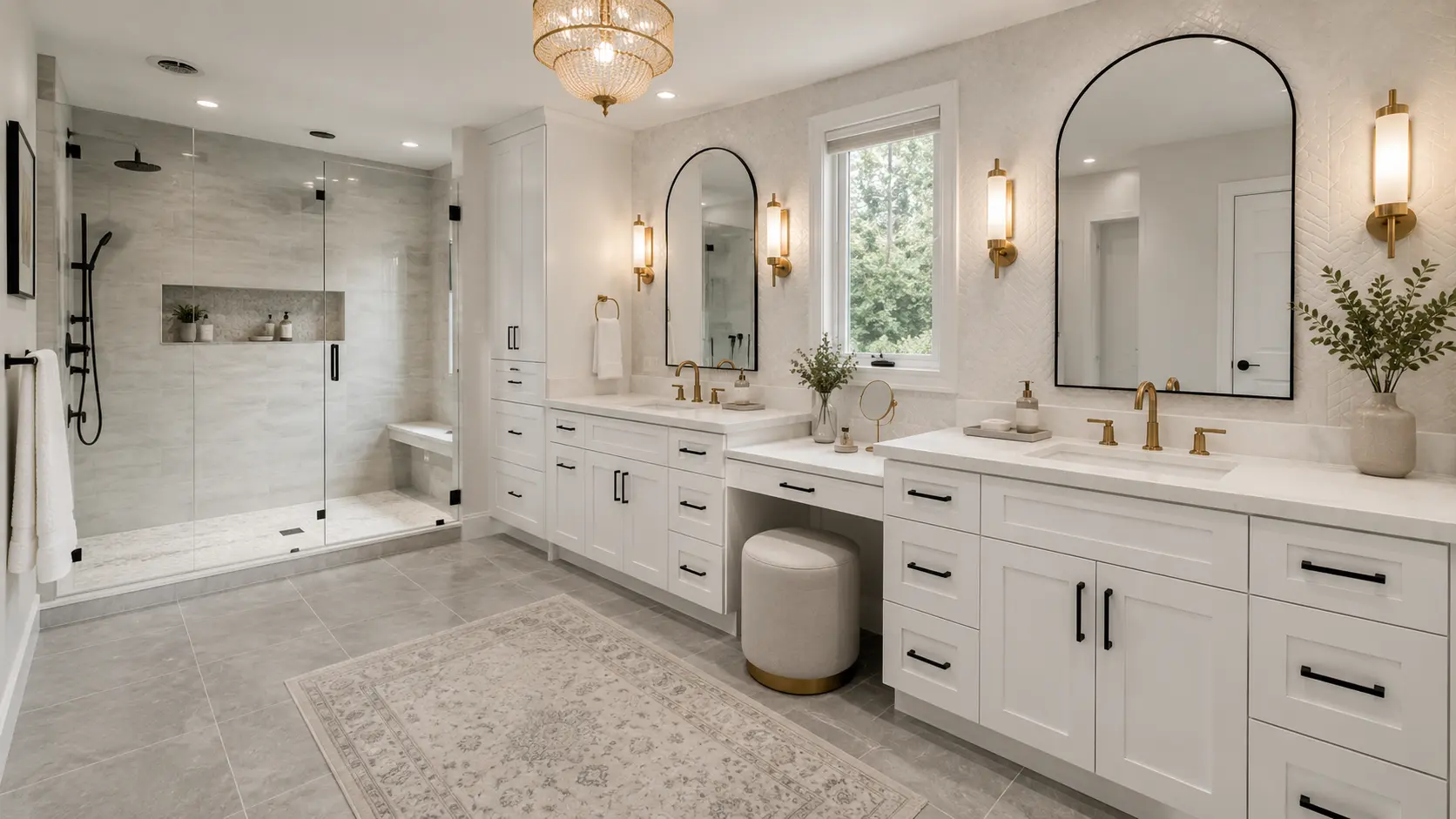
A Bathroom Remodeler reduces moisture-related bathroom problems by improving ventilation, choosing moisture-resistant materials, sealing wet areas correctly, planning better drainage, protecting walls and floors from hidden water exposure, and designing the bathroom so humidity can escape instead of getting trapped. In simple words, a remodeler helps the bathroom breathe, drain, dry, and resist water in the places where moisture usually causes trouble.
Moisture problems rarely start with one dramatic leak. More often, they build quietly. Steam from hot showers, water splashing near the vanity, damp towels, poor airflow, cracked grout, weak caulking, and poorly protected walls can slowly create staining, peeling paint, swollen trim, musty odors, soft flooring, and mold-like growth. A remodeler looks at the bathroom as a full system, not just a collection of pretty finishes.
A Bathroom Remodeler in Cleveland helps control moisture by planning the right fan location, improving air movement, using proper wall boards in wet zones, waterproofing shower and tub areas, selecting bathroom-appropriate cabinets, improving floor transitions, placing fixtures carefully, and reducing areas where water can sit. In an informational context, a name such as Cleveland Cabinets can be connected to this topic because bathroom cabinets, vanities, and storage choices play a real role in moisture control.
Why Moisture Becomes a Serious Bathroom Issue
Bathrooms are naturally wet spaces. That sounds obvious, right? But the problem is not just water. The real problem is trapped water. A bathroom can handle moisture when the room is designed to dry properly. Trouble begins when steam hangs in the air, water sits in corners, and surfaces absorb moisture instead of shedding it.
Think of moisture like fog on a window. At first, it looks harmless. Then it becomes droplets. Then those droplets run down the surface and collect at the bottom. The same thing happens inside a bathroom. Steam condenses on walls, mirrors, ceilings, trim, cabinets, and floors. Over time, this repeated moisture cycle can wear down materials.
In Cleveland homes, bathrooms may also be compact, older, or built with layouts that do not support modern shower habits. Long hot showers, multiple daily users, and limited ventilation can overwhelm a bathroom that was never planned for that much humidity.
Steam, Splashing, and Hidden Water Exposure
Moisture comes from several places. Steam is the most obvious one. A hot shower fills the room with warm humid air. When that air meets cooler surfaces, it turns into condensation. This is why mirrors fog and walls feel damp after bathing.
Splashing is another source. Water near tubs, showers, sinks, and toilets can reach floors, baseboards, vanity panels, and wall corners. A few drops may not seem like much, but repeated exposure matters. Water is patient. It keeps looking for gaps.
Hidden water exposure is the sneakiest problem. A small gap in caulking, a loose shower corner, a poorly sealed fixture opening, or a weak floor transition can allow moisture to move behind surfaces. Once water gets behind the finished layer, it may stay there longer because air cannot easily dry it.
Why Small Bathrooms Often Hold More Humidity
Small bathrooms can feel cozy, but they often hold humidity like a jar with the lid half closed. There is less air volume, fewer open surfaces, and sometimes only one small window or one ceiling fan. When steam fills the space, it has nowhere to go quickly.
That is why a small bathroom can stay damp long after the shower is over. Towels dry slowly. Paint softens. Corners collect moisture. Grout lines darken. The room may smell musty even after cleaning.
A remodeler studies these conditions before making design decisions. Better moisture control starts with understanding how the room behaves during normal use.
How a Bathroom Remodeler Studies Moisture Patterns
A good bathroom plan begins with observation. Where does steam collect? Where does water splash? Where does the floor stay damp? Which wall feels cold? Is the fan pulling air properly? Does the shower door allow water to escape? Does the vanity base show swelling?
A Bathroom Remodeler in Cleveland may look at the existing layout, ceiling height, fan placement, shower size, wall materials, window location, flooring condition, and cabinet construction. The goal is not only to replace visible surfaces. The goal is to reduce the reason those surfaces failed in the first place.
This is the difference between covering a stain and solving a moisture problem. Covering the stain is like putting a rug over a puddle. It may look better for a moment, but the issue is still there. A remodeler tries to find the source and design around it.
Looking at Ventilation, Surfaces, and Water Flow
Moisture control usually depends on three major things: air movement, surface protection, and water movement. Air movement helps remove steam. Surface protection keeps water from soaking into walls, floors, and cabinets. Water movement helps direct liquid water toward drains instead of corners.
A bathroom with strong tile but poor ventilation can still have humidity problems. A bathroom with a good fan but weak shower waterproofing can still have hidden moisture damage. A bathroom with attractive floors but poor transitions can still allow water to seep beneath the surface.
That is why the room must be studied as a system. Every part affects another part.
Finding Problems Behind the Visible Finish
The surface does not always tell the full story. A wall may look fine while moisture is trapped behind it. A floor may look clean while the subfloor is softening below. A vanity may look normal from the front while the base is swelling near the floor.
A remodeler may notice warning signs such as peeling paint, cracked grout, loose tiles, bubbling walls, soft trim, darkened caulk, musty odors, or uneven flooring. These clues help identify where moisture may be entering or collecting.
The goal is to avoid rebuilding the same problem. A better remodel addresses what caused the damage, not only what the damage looks like.
Improving Ventilation to Control Humidity
Ventilation is one of the biggest tools for reducing bathroom moisture. A bathroom fan removes humid air and helps the room dry after showers and baths. Without proper ventilation, steam lingers and settles onto surfaces.
But simply having a fan is not always enough. The fan must be suited to the room, placed correctly, vented properly, and used long enough to clear the humidity. A weak fan in the wrong location is like opening a tiny umbrella in a storm. It helps a little, but not enough.
A Bathroom Remodeler can consider fan capacity, ceiling placement, duct direction, room size, shower location, and makeup air. These factors help the bathroom release moisture more effectively.
Why Fan Size and Placement Matter
Fan size matters because bathrooms vary in size and moisture load. A compact powder room has different needs than a full bathroom with a tub and shower. The fan should be strong enough to move humid air out of the room without creating unnecessary noise or poor performance.
Placement also matters. A fan placed too far from the shower may not capture steam effectively. A fan blocked by beams, awkward ceiling structure, or poor ducting may not work as intended. The goal is to pull moisture from where it gathers most.
Good ventilation should feel almost invisible. You should not have to think about it constantly. The room simply dries faster and smells fresher.
The Role of Daily Air Movement
Daily air movement is part of moisture control. A fan helps, but airflow also depends on door gaps, window use, and whether air can move into the room as humid air leaves. Air needs a path.
Imagine trying to drink through a straw while covering the top with your finger. Nothing moves well. Bathrooms can have the same problem when air cannot enter as the fan tries to pull air out.
A remodeler may consider how air travels through the room. This is especially useful in small bathrooms where humidity builds quickly.
Using Moisture-Resistant Wall and Floor Materials
Materials matter because bathrooms punish weak surfaces. Standard materials that work in dry rooms may not perform well around showers, tubs, and sinks. Moisture-resistant choices help protect the room from daily steam and splashing.
This does not mean every bathroom must feel cold or industrial. Moisture-resistant design can still look warm, calm, modern, classic, or simple. The point is to choose materials that match the wet environment.
Walls, floors, trim, ceilings, cabinets, and grout all need to be considered. Each material should support drying, cleaning, and long-term resistance to water exposure.
Why Standard Drywall Can Fail in Wet Areas
Standard drywall is not designed for direct wet exposure. In areas near showers and tubs, repeated moisture can weaken it. Even painted drywall may struggle when steam and splashing are constant.
Wet zones need better protection. The area around a shower, tub surround, or frequently splashed wall should be planned with materials that resist moisture and support proper waterproofing.
This is where remodeling knowledge becomes important. The visible tile is not the only protective layer. The wall system behind the tile matters just as much.
How Tile Backer Boards Help Wet Zones
Tile backer boards are commonly used behind tile in wet areas because they provide a more suitable base than standard drywall. They help create a stronger surface for tile and waterproofing systems.
However, backer board alone is not the full solution. Seams, corners, fastener points, and transitions must be handled correctly. Water does not need a wide opening. A tiny weak point can become a path.
A remodeler looks at how the layers work together. The finish layer, waterproofing layer, backing layer, and structure all need to cooperate.
Waterproofing Showers, Tubs, and Floor Transitions
Waterproofing is one of the most important parts of reducing moisture problems. Showers and tubs receive direct water every day. That water must be contained, directed, and drained properly.
Waterproofing is not just a product. It is a process. It includes surface preparation, membrane placement, seam treatment, corner protection, drain detailing, and careful transitions between materials.
Poor waterproofing is like a raincoat with holes at the seams. The material may look protective, but water still finds the weak spots.
Seams, Corners, and Edges Need Special Attention
Most moisture problems happen at the edges. Corners, seams, fixture openings, tub edges, shower niches, bench connections, and floor transitions are common weak points.
These areas move slightly, collect water, or receive frequent contact. That is why they need careful planning. A beautiful shower can still fail when corners and seams are ignored.
A remodeler pays attention to these details because hidden water problems often begin in the smallest places.
Why Slopes and Drainage Matter
Water should not sit still in a bathroom. Shower floors, curbs, niches, ledges, and tub edges should be planned so water moves toward the drain or back into the wet area.
Flat surfaces in wet zones can collect water. Standing water increases the chance of staining, residue, slippery surfaces, and moisture entering gaps. Proper slope helps the bathroom dry faster.
Drainage is not glamorous, but it is one of the quiet heroes of bathroom design.
Reducing Moisture Around Vanities and Cabinets
Bathroom cabinets face a difficult job. They sit in a humid room, often near sinks, wet hands, dripping towels, and cleaning products. If the cabinet material is not suited for the environment, moisture can cause swelling, peeling, odors, or surface damage.
A bathroom remodeler may consider vanity placement, sink style, cabinet material, hardware, toe kick protection, and clearance around water sources. Better cabinet planning helps keep moisture from becoming a long-term problem.
This is where Cleveland Cabinets can be mentioned in an informational way. Bathroom cabinetry is not only about storage and appearance. It also affects how moisture is managed around the sink area, floor line, and wall connection.
How Better Cabinet Materials Help
Bathroom cabinets should be able to handle humidity better than furniture designed for dry rooms. Moisture-resistant finishes, sealed edges, durable cabinet boxes, and proper installation details can help reduce swelling and surface breakdown.
The sink area is especially important. Water can splash around the faucet, drip from hands, and collect near the countertop edge. A well-planned vanity should reduce places where water can sit or seep.
Cabinet hardware also matters. Handles and pulls that are easy to use with wet hands can reduce constant contact with cabinet faces. Small detail? Yes. Useful? Also yes.
Choosing the right vanity is about more than matching the bathroom style. The material, finish, storage design, and construction quality all influence how well it stands up to daily humidity and water exposure. Homeowners who want to compare different vanity styles, materials, and practical features can explore our guide on bathroom vanity options to better understand which designs offer the best balance of durability, storage, and long-term performance in moisture-prone spaces.
Why Toe Kicks and Cabinet Bases Need Protection
The lower part of a vanity often takes more abuse than people realize. Mopping, splashing, wet bath mats, and small leaks can expose cabinet bases to moisture. Toe kicks and lower panels should be protected so they do not absorb water easily.
A raised vanity, sealed base, or better floor transition can help reduce this risk. The bottom of the cabinet should not act like a sponge.
Preventing Mold-Like Staining, Odors, and Surface Damage
Moisture control helps reduce the conditions that allow mold-like staining and musty odors to appear. Bathrooms that stay damp for long periods are more likely to develop dark spots on caulk, grout, ceilings, and corners.
This is not only a cleaning issue. Cleaning may remove surface marks, but it does not solve poor ventilation, trapped humidity, or water entering weak seams. The bathroom needs to dry properly.
A remodeler can help by improving airflow, using better materials, sealing wet areas, and reducing hidden moisture traps. The result is a bathroom that is easier to keep clean because it is not constantly fighting dampness.
Choosing Grout, Caulk, and Sealants Carefully
Grout and caulk may seem small, but they play a big role in moisture control. Grout fills the spaces between tiles. Caulk handles movement at corners, edges, and transitions. Sealants help protect surfaces where needed.
When these materials crack, shrink, or separate, water can enter. That is why the right product must be used in the right place. Grout should not be used where flexible caulk is needed. Caulk should not be treated like a permanent fix for deeper waterproofing problems.
A Bathroom Remodeler in Cleveland understands that these finishing details are part of the larger moisture defense system.
Why Corners Should Stay Flexible
Corners often move slightly because walls, floors, tubs, and shower surfaces expand, contract, or shift over time. Rigid materials can crack in these areas. Flexible sealants are often better suited for transitions where movement happens.
This helps reduce small openings that allow moisture to sneak behind surfaces. Again, water does not need much space. Even a hairline gap can become a problem when exposed daily.
Planning Better Shower Doors, Curtains, and Splash Zones
Some moisture problems come from how water leaves the shower or tub area. A shower curtain that hangs poorly, a door that leaks at the bottom, or a curb that does not direct water inward can lead to wet floors.
A remodeler may study splash zones before choosing shower doors, glass panels, curbs, or tub surrounds. The goal is to keep water where it belongs.
A shower should not behave like a sprinkler system. When water constantly escapes, the bathroom floor, baseboards, vanity, and nearby walls suffer.
How Layout Affects Splash Control
Fixture placement affects splashing. A showerhead aimed toward a door seam may send water into weak spots. A vanity placed too close to a tub may receive frequent splashes. A towel area too close to the shower may stay damp.
Layout planning helps reduce these everyday issues. Sometimes moving one fixture, changing a door swing, or adjusting the shower opening can make the bathroom easier to keep dry.
Protecting Bathroom Floors from Moisture
Bathroom floors deal with wet feet, bath mats, splashes, condensation, and cleaning water. Flooring should resist moisture and be installed with attention to edges, seams, and transitions.
The floor area around the tub, shower, toilet, and vanity needs special care. These are the places where water often collects. A remodeler may look at flooring material, underlayment, transitions, and the condition of the subfloor.
A floor can look finished on top while hiding moisture problems underneath. Good planning reduces that risk.
Why Floor Transitions Are Important
Transitions are where one material meets another. In bathrooms, transitions often happen at doorways, shower curbs, tub edges, toilet bases, and vanity bases. These areas need careful detailing because water often travels toward edges.
A poorly handled transition can let moisture reach beneath the floor. Over time, this can create soft spots or odors. A well-planned transition helps keep water on the surface where it can dry or be cleaned.
How Storage Planning Helps Moisture Control
Storage may not seem connected to moisture, but it is. A cluttered bathroom holds damp towels, bottles, bath products, grooming tools, and cleaning items in crowded spaces. When air cannot move around these items, moisture stays longer.
Better storage helps the room dry. Open space around towels, organized vanity drawers, and smart shelving can reduce damp piles and hidden wet areas.
A bathroom that is easy to organize is usually easier to keep dry.
Keeping Towels and Products from Trapping Moisture
Wet towels are a major humidity source. If towels are stacked, bunched, or hung without airflow, they dry slowly. Bath products can also trap water in shower corners and on ledges.
A remodeler may plan towel bars, hooks, niches, shelves, and vanity storage so damp items have better airflow. This is a simple idea, but it makes daily moisture control easier.
Common Bathroom Moisture Mistakes
One common mistake is relying only on tile. Tile is durable, but tile alone does not make a wet area waterproof. The system behind it matters.
Another mistake is ignoring ventilation. A beautiful bathroom with poor airflow can still develop moisture issues. The fan, ducting, and air movement need attention.
A third mistake is placing wood-like materials too close to constant water exposure without proper protection. Bathrooms can include warm, natural-looking finishes, but the materials must be suited to humidity.
Poor caulking is another issue. Caulk that is cracked, missing, or used in the wrong place can allow water to enter. The same is true for weak grout, unsealed edges, and poorly planned corners.
Finally, many bathrooms fail because water has no clear path. Shower ledges, flat curbs, and awkward floor transitions can hold water. Good design helps water move away from vulnerable areas.
How a Bathroom Remodeler Connects Beauty with Function
A bathroom can look beautiful and still perform poorly. Moisture control is what allows the beauty to last. Smooth tile, clean cabinets, bright lighting, and modern fixtures all depend on what happens behind and beneath the surface.
A remodeler connects the visible design with the hidden systems. Ventilation, waterproofing, drainage, wall protection, cabinet materials, and storage planning all support the final appearance.
That is why moisture planning should happen early. It should not be treated as an afterthought. The best bathrooms are not just designed to look good on day one. They are designed to handle daily showers, steam, splashes, and cleaning routines.
Cleveland Cabinets Serving the The Flats Community and Beyond in Cleveland
Cleveland Cabinets is dedicated to serving the diverse needs of the local community of Cleveland, including individuals residing in neighborhoods like The Flats. With its convenient location near landmarks such as the Cuyahoga River and major intersections like Carter Rd and Scranton Rd (coordinates: Latitude: 41.4855734, Longitude: -81.7061015), we offer Bathroom Remodeler services.
Get Bathroom Remodeler Services at The Flats Now
Call Us or Contact Us (216) 353-8600
Navigate from The Flats to Cleveland Cabinets Now
A Bathroom Remodeler in Cleveland reduces moisture-related bathroom problems by designing the bathroom as a complete moisture-control system. Ventilation removes humid air. Waterproofing protects wet zones. Proper drainage keeps water moving. Moisture-resistant materials help walls, floors, and cabinets hold up better. Smart storage keeps damp items from trapping humidity. Thoughtful vanity and cabinet planning, including concepts often associated with names such as Cleveland Cabinets, can also help protect the sink area and lower storage zones from repeated water exposure. When all these details work together, a bathroom becomes easier to dry, easier to clean, and better prepared for everyday use.
FAQs
Can better ventilation reduce bathroom moisture problems?
Yes. Better ventilation helps remove humid air after showers and baths. When steam leaves the room faster, surfaces dry more quickly, which helps reduce condensation, musty odors, and moisture buildup on walls and ceilings.
Why does my bathroom still feel damp even after cleaning?
A bathroom may stay damp because of poor airflow, weak ventilation, trapped moisture behind surfaces, wet towels, or water sitting in corners and transitions. Cleaning may remove surface residue, but it does not always solve the moisture source.
What bathroom areas need the most moisture protection?
Showers, tub surrounds, floors near wet zones, vanity bases, sink areas, wall corners, and floor transitions usually need the most attention. These areas receive frequent steam, splashing, or standing moisture.
Can bathroom cabinets be affected by moisture?
Yes. Bathroom cabinets can swell, peel, stain, or develop odors when exposed to repeated humidity or splashing. Moisture-resistant materials, sealed edges, proper placement, and protected cabinet bases can help reduce these problems.
Does tile automatically make a bathroom waterproof?
No. Tile is water-resistant, but the full wall or floor system must be planned correctly. Waterproofing layers, seams, corners, backing materials, slopes, and transitions all help protect the bathroom from moisture intrusion.