

A cosmetic bathroom remodel changes the surfaces you see, like paint, fixtures, and a vanity. A full bathroom remodel opens the walls and changes the layout, plumbing, and structure. The right choice depends on what is wrong with the room, not just how it looks.
A bathroom that works well but looks tired is usually a good fit for a cosmetic update. One with soft floors, recurring leaks, or a layout that no longer suits the household needs a deeper fix. Knowing which one you have, before you pick a single finish, keeps your budget and your timeline on track.
The Short Answer: Scope, Systems, and Layout
Most homeowners use the words “update,” “renovation,” and “remodel” as if they mean the same thing. They do not.
The real difference comes down to three things: scope, systems, and layout.
Scope is how much of the room gets touched. A cosmetic update touches surfaces. A full remodel touches nearly everything.
Systems are the plumbing, electrical, ventilation, and waterproofing behind the finishes. A cosmetic update leaves them alone. A full remodel inspects them and often replaces them.
Layout is where the toilet, vanity, and shower sit. A cosmetic update keeps every fixture where it is. A full remodel can move them.
Once you know which of those three your bathroom needs, the decision gets much easier.
What Counts as a Cosmetic Bathroom Remodel
A cosmetic remodel makes the room look newer without changing how it is built. The walls stay closed. The pipes stay where they are.
Homeowners planning bathroom remodeling in Fairview Park often choose this route for a bathroom that works fine but looks tired.
Common Cosmetic Updates
Typical cosmetic work includes a few familiar tasks:
- Fresh paint in a moisture-resistant finish
- A new vanity or refaced cabinet doors
- Updated faucets, towel bars, and lighting
- New mirrors and hardware
- Replacing the toilet seat or the toilet itself in the same spot
- Re-caulking and regrouting tile that is still sound
Each of these can change the feel of the room in a few days. None of them requires opening a wall.
What a Cosmetic Update Does Not Touch
This is the part that surprises people. A cosmetic update does not touch the shower pan, the supply lines, the drain slope, the subfloor, or the wiring.
If those are healthy, that is fine. If they are not, new paint simply hides the problem for a while.
What a Full Bathroom Remodel Includes
A full remodel starts by stripping the room down to the studs and subfloor. Everything is rebuilt in the right sequence, using the finished design as a guide.
That usually means new tile, a new tub or shower, a new vanity and countertop, new plumbing fixtures, updated lighting, and often a new layout. Everything is planned as one connected design instead of a set of separate swaps.
The Work Behind the Walls
Here is where a full remodel earns its name. With the walls open, the crew can check and correct what a cosmetic update never sees.
That includes plumbing rough-in, drain lines, electrical circuits, insulation, and ventilation. It also includes waterproofing, which many remodelers call the most important step in a lasting bathroom.
If water has been quietly damaging the subfloor or wall framing, this is the stage where it gets found and fixed properly.
Layout Changes That Only a Full Remodel Allows
Want to swap a tub for a walk-in shower? Move the vanity to a different wall? Widen a cramped doorway? Those changes need new plumbing runs, new framing, and often a permit.
That is why layout changes almost always point toward a full remodel. They are not surface work.

Cosmetic vs Full Bathroom Remodel Side by Side
A quick comparison makes the gap easy to see.
| Factor | Cosmetic Remodel | Full Remodel |
|---|---|---|
| Scope | Surfaces and finishes | Whole room, including behind the walls |
| Layout | Stays the same | Can change |
| Plumbing and electrical | Untouched | Inspected, updated, or moved |
| Permits | Rarely needed | Often needed |
| Timeline | Days to a couple of weeks | Several weeks or more |
| Disruption | Low | High |
| Best fit | Sound bathroom with dated looks | Failing, outdated, or poorly planned bathroom |
Use this table as a starting point, not a rule. Every bathroom is a little different, especially in older homes.
How Long Each Type Takes
Time is one of the clearest differences.
A cosmetic bathroom update usually takes anywhere from a few days to about two weeks.
A full remodel runs much longer. Demolition, rough-in, inspections, waterproofing, tile work, and finishing all have to happen in the right sequence, and each stage has to cure or pass inspection before the next begins.
Material lead times matter too. A custom vanity or special tile can take weeks to arrive, and that wait can stretch the schedule well past the construction itself.
How Much Disruption to Expect
A cosmetic update is easy to live with. Painters and installers come and go, and the bathroom may be out of use for only a day or two at a time.
A full remodel is a different experience. Water gets shut off. Dust moves through the house. The bathroom is out of service for weeks.
Families with only one full bathroom should plan for this early. A second bath, a gym membership, or a stay with relatives during the roughest days can make the project far less stressful.
How Permits and Inspections Differ
Permits are another place where the two paths split.
A cosmetic update rarely needs one. Painting, swapping a faucet, or installing a new mirror usually falls outside the permit process. Replacing a vanity in the same spot with the same plumbing connections often does too, though local rules vary.
A full remodel is different. Moving a drain, adding a circuit, or reworking the shower area usually triggers permits and inspections. Inspectors check the rough-in work before the walls are closed, then return near the end of the project.
Those inspections protect you. They confirm that the work behind the tile meets code, which matters long after the remodel is finished.
It also affects scheduling. Inspections happen on the building department’s calendar, not the crew’s. A good remodeler plans around them from the first day.
For homeowners doing bathroom remodeling in Fairview Park, the safest habit is simple. Ask your remodeler which permits the scope requires before the work starts, and ask who pulls them.
What Happens to the Vanity and Storage in Each Option
Cabinetry is where many homeowners feel the difference most in daily life.
In a cosmetic update, the vanity often stays. The doors may be refaced, painted, or fitted with new hardware. The countertop and sink might be swapped if the plumbing stays put. Storage gets a lift, but the footprint does not change.
In a full remodel, the vanity is part of the plan from the start. Its width, height, and drawer layout are chosen to fit the new room. A narrow bathroom might get drawers instead of doors. A shared bathroom might get two sinks and more counter space.
That kind of planning is hard to do after the fact. It works best when the cabinetry, countertop, and plumbing locations are decided together, before anything is ordered.
This is also where a design process helps. Seeing a 3D rendering of the finished room shows whether the vanity actually fits the space and the way your household uses it.
Which Option Adds More Resale Value
Both options can help a home show better. They help in different ways.
A cosmetic update improves first impressions quickly. Fresh surfaces, new lighting, and a clean vanity make a dated bathroom feel cared for.
A full remodel changes what the room can do, and it removes the unknowns that future owners worry about. Moisture damage, old plumbing, and awkward layouts are the things that make inspectors and buyers’ contractors pause.
National Cost vs. Value data shows a midrange bathroom remodel recoups roughly 74 percent of its cost at resale.
That figure is a national average, and local demand shifts it. A local real estate agent can tell you what shoppers in your part of Northeast Ohio expect to see in a bathroom.
Return on investment, or ROI (Return on Investment), also depends on spending in line with your goal. A modest cosmetic update on a sound bathroom often makes more sense than a major rebuild you do not need.
Signs a Cosmetic Update Will Not Be Enough
Some bathrooms look dated. Others are telling you something is wrong. The difference matters, because covering a real problem with new finishes only delays the repair.
If you want a longer checklist, our guide on signs it is time to remodel a bathroom goes through them in detail. Here are the main ones.
Moisture and Water Damage
Soft spots near the tub, stained ceilings below the bathroom, peeling paint, and a musty smell all point to moisture where it should not be.
New paint will not stop a slow leak. Opening the walls will.
Outdated Plumbing and Electrical
Many homes near Kamm’s Corners were built decades ago. Their original supply lines, drains, and wiring were never designed for today’s fixtures or code.
If you call a plumber often, see rusty water, or notice flickering lights near the vanity, a cosmetic update will not fix the underlying issue.
A Layout That No Longer Works
Sometimes the room simply does not fit the household anymore. A door that swings into the toilet. A vanity too small for two people. A tub nobody uses.
Layout problems are not cosmetic problems. Only a full remodel can solve them.
When a Cosmetic Update Is the Smarter Move
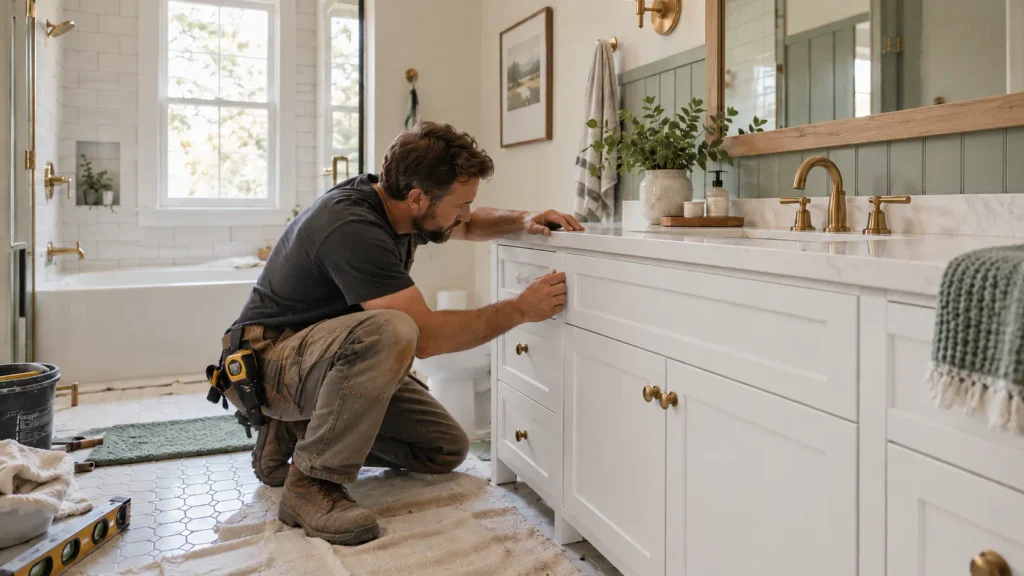
A cosmetic update is a good choice when the bathroom is sound but dated. The plumbing works. The floor is solid. The layout suits the household.
It also fits homeowners who plan to move within a few years, or who want a quick refresh before listing a home. In both cases, the goal is a cleaner, brighter room without a long project.
A cosmetic update also works as a first step. You can refresh surfaces now and plan a larger remodel later, once your budget and priorities are clearer.
Keep one rule in mind: always check the condition of the room first. A short inspection before any cosmetic work can save you from painting over a problem.
What the Week-by-Week Experience Looks Like
Numbers on a page only go so far. It helps to picture how each project actually feels.
A Cosmetic Update in Practice
Week one might bring a painter, a vanity installer, and an electrician for a lighting swap. Each visit is short. The bathroom may be usable again by the end of the day.
By the end of week two, the room is done. Caulk is cured, the mirror is up, and the towel bars are mounted.
A Full Remodel in Practice
The first stretch is demolition and rough-in. The room is stripped, pipes and wires are updated, and the first inspection happens.
The middle stretch is waterproofing and tile. These steps need time to cure, so the schedule moves in small, careful pieces.
The final stretch is the vanity, fixtures, lighting, and paint, followed by a last walk-through. Delays usually come from material lead times and inspections, so ordering early keeps the project moving.
Knowing this rhythm in advance makes the disruption easier to accept.
Planning the Budget for Each Path Without Guesswork
Budget questions come up early, and they should. The honest answer is that scope sets the budget, not the other way around.
A cosmetic update has a narrow scope, so there are fewer unknowns. A full remodel has a wider scope and a higher chance of surprises once walls are opened.
That is why a preliminary scope matters. A budgetary estimate lays out the work in plain terms, so you can choose materials that fit your budget before anything is ordered.
Financing options are available for homeowners who want to spread out the project, and it is worth asking about them early.
Keep a cushion for the unexpected on a full remodel. Many remodelers suggest setting aside 10 to 20 percent above the plan for surprises behind the walls.
The Middle Path: A Partial or Phased Remodel
Not every project fits neatly into one of the two boxes. Some homeowners choose a middle path.
A partial remodel might replace the shower and flooring while keeping the vanity and layout. A phased approach might handle the wet areas first and finish the rest later.
This route can spread the work out. It needs careful planning, though. If the shower is rebuilt but the rest of the room stays dated, the design can look uneven.
That is where custom bathroom design planning helps. A clear plan shows which pieces to do now and which can wait without clashing.
Questions to Ask Before You Decide
A few honest questions usually point to the right choice.
- Is anything damaged, leaking, or smelling musty?
- Does the layout work for everyone who uses the room?
- How long do you plan to stay in the home?
- Can your household manage without this bathroom for several weeks?
- Is the goal a fresher look, or a better-functioning room?
If your answers lean toward looks, a cosmetic update may be enough. If they lean toward damage, age, or function, plan for a full remodel.
Cleveland Cabinets has earned 120+ reviews from homeowners across Northeast Ohio.
It also helps to read reviews and look at finished projects from a local team before you decide how far to go.
How to Start the Conversation With a Remodeler
Once you have a rough idea of which path fits, the next step is a conversation with a professional who can look at the room in person.
Bring photos of the bathroom, a short list of what bothers you most, and any signs of moisture or damage you have noticed. Mention how many people use the room and how long you plan to stay in the home.
A good designer will ask questions back. They will check the layout, look at the condition of the walls and floor, and explain what each scope would involve, in plain language and without pressure.
That visit is also the time to ask about timelines, permits, and who handles each part of the work. Homeowners across Northeast Ohio tend to feel far more confident once the plan is written down and the scope matches the real condition of the room.
Cleveland Cabinets Serving the Kamm’s Corners Community and Beyond in Fairview Park
Cleveland Cabinets works with homeowners throughout Fairview Park, including the Kamm’s Corners area near Rocky River. Many homes around the Lorain Ave and Rocky River Dr crossing, at roughly 41.4515471, -81.8246662, were built long before today’s plumbing and electrical standards, which is why the cosmetic or full question comes up so often here.
Get Bathroom Remodeling Kamm’s Corners Services Now
Navigate from Kamm’s Corners to Cleveland Cabinets Now
Frequently Asked Questions
What is the difference between a bathroom remodel and a bathroom renovation?
People use the terms loosely. Many contractors say renovation for surface updates and remodel for changes to layout and structure. Ask any professional to describe the exact work instead of relying on the label.
Do I need a permit for a cosmetic bathroom update?
Usually not. Paint, hardware, and swapping a faucet rarely need one. Moving plumbing, adding circuits, or changing walls usually does.
How do I know if my bathroom needs a full remodel?
Look for soft floors, recurring leaks, persistent mold, outdated plumbing or wiring, or a layout that no longer works. Any of these points toward a full remodel.
Can I do a cosmetic update now and a full remodel later?
Yes, but plan ahead. Anything you install now, like a new vanity, may need to be removed if the layout changes later.
Is bathroom remodeling in Fairview Park different in older homes?
It can be. Many older homes have aging plumbing, limited ventilation, and hidden moisture, so a careful inspection matters before choosing a scope.